Having the right skills alone is not enough to build a successful career. It’s about having people around you who can share ideas, give you advice and help you find new opportunities.” This is where a Professional Network can come in handy. It allows you to meet people who have similar interests, who work in your industry, or are experienced enough to help you grow.
It’s not necessary to know hundreds of people to develop meaningful relationships. Having a small number of useful and trusted contacts can make a real difference to your career or business. The trick is to build relationships and stay in touch organically.
In this guide we’ll walk through what a Professional Network is, why it’s important and how to build one step by step. We’ll also look at how Tapect helps professionals share their contact details and makes networking easier.
What Is a Professional Network?
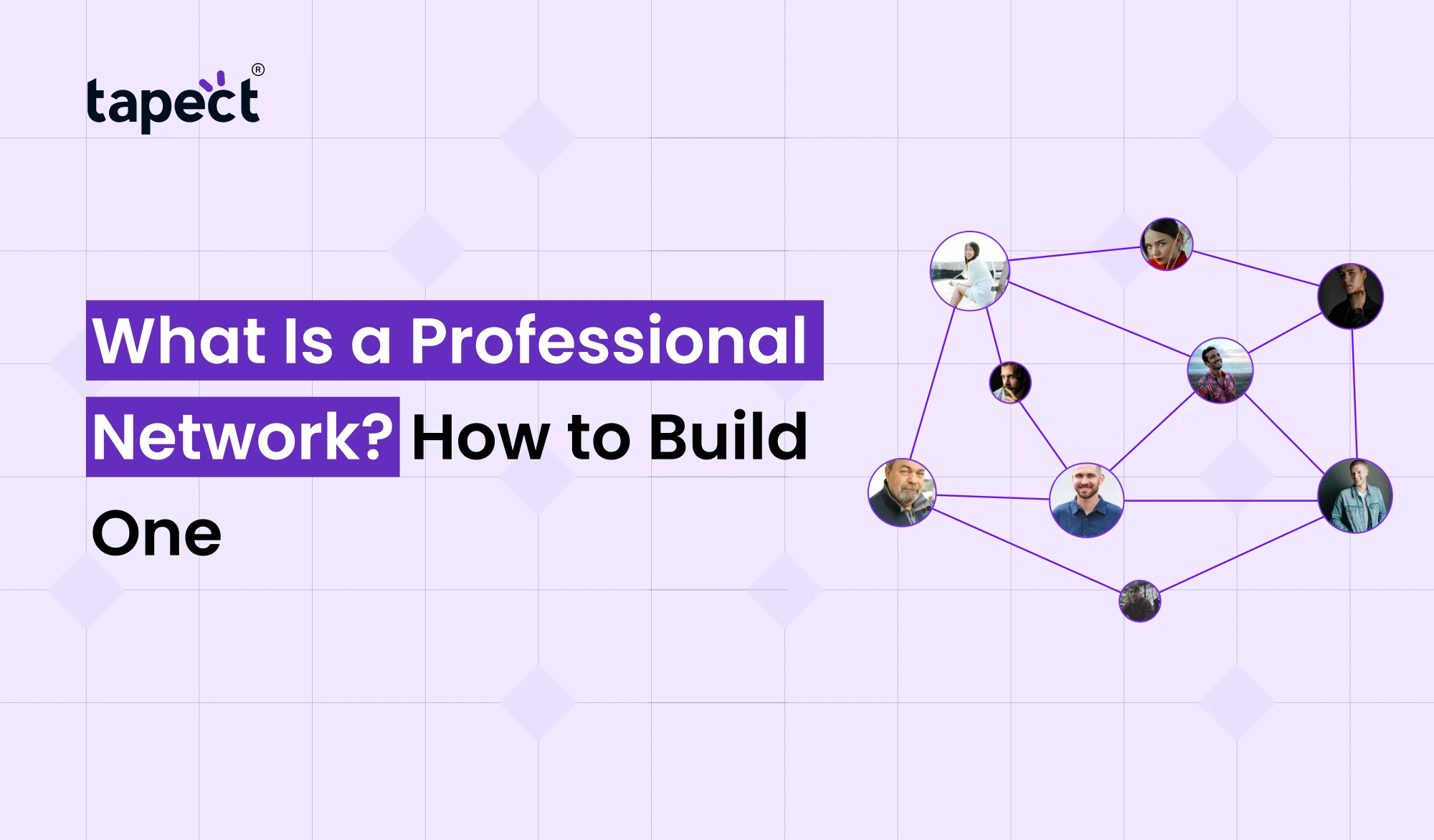
A Professional Network is a group of people you network with for business ideas, career growth, learning and professional support. These could be colleagues, managers, clients, business owners, mentors or people you meet at events.
Say for example that you work in digital marketing. Your network may consist of SEO experts, content writers, web developers, and business owners. You can learn from their experience, share useful information and find new projects.
You can expand your network beyond the people you already know. You can make new contacts on social media, at professional events, in online groups, at industry meetings.
The main objective is to build useful relationships based on trust, respect and common interests.
Why Is a Professional Network Important?
Building relationships opens doors that are hard to find on your own. Here are some reasons why networking is important.
1. Find Better Career Opportunities
A lot of jobs come through referrals and personal contacts. Through someone in your network, you may learn of a job opening before it is publicly advertised.
2. Learn New Skills
And the advice from seasoned professionals will be practical, something you can’t find in books or courses. their knowledge will help you solve problems and improve your work.
3. Grow Your Business
Business owners can find potential customers, partners and suppliers. These relationships can open the door to new projects and long-term business growth.
4. Build Confidence
By talking to people in your field, you will get better at introducing yourself, talking about your work, and sharing your ideas.
5. Get Advice and Support
Work can sometimes seem confusing especially when you are presented with a new challenge. You can trust contacts to give you advice based on their experience.
A strong Professional Network can help you at different points in your career, whether you are a student, job seeker or experienced business owner.
Types of Professional Networks
There are several different approaches to building connections depending on your goals and work style.
Personal Connections
These include former classmates, friends, co-workers and people you’ve worked with. It is often easier to start a conversation because you already know each other.
Online Professional Connections
Connect with professionals on LinkedIn, industry forums, online communities, and virtual events. These links enable you to connect beyond your city or your country.
Industry Connections
They are people who work in the same field as you. A marketing professional, for example, might network with SEO specialists, advertising experts, and content strategists.
Business Connections
These relationships revolve around your customers, suppliers, business partners and other people who can help you achieve your business goals.
Each kind has its worth. Make an effort to develop a variety of contacts and not depend solely on one group.
How to Build a Professional Network Step by Step
It doesn’t take a complex plan to begin networking. Build meaningful relationships follow these easy steps.
1. Decide What You Want to Achieve
First, consider why you want to make new friends. Perhaps your goal is to find a job, learn a new skill, get clients or grow your business.
If you know what you want, you’ll find the right people.
For example, if you want to grow your SEO career, start connecting with SEO managers, digital marketing professionals, and business owners.
2. Start With People You Already Know
You might have more contacts than you realise. Good places to start are former workmates, college friends, teachers and past clients.
Send a short message, ask how they are doing, and share a little about your current work. Keep the conversation friendly instead of asking for a favor immediately.
3. Use Online Networking Services
Meeting people in your industry is much easier with online platforms. You can join discussions, follow experts and share useful content.
When using Online Networking Services make sure your profile clearly explains your skills, experience and interests.
Here are some good habits:
- Keep your professional profile updated.
- Follow people who share useful industry knowledge.
- Comment thoughtfully on relevant posts.
- Join groups related to your career.
- Send personal connection requests instead of generic messages.
Instead of sending a generic message, send a personal connection request.
These small steps will help you build relationships over time.
4. Attend Events and Meetups
Industry events, workshops, seminars and business meetings give you an opportunity to meet people face to face.
Prepare a short intro about yourself before attending. Ask people what they do for a living and listen carefully to what they say.
After the event, follow up with people you enjoyed talking to. A little note a day or week later reminds them of you.
5. Make Contact Sharing Simple With Tapect
Sharing your contact details is a vital part of networking. But paper cards can be lost and typing in information takes time.
Tapect enables professionals to share their contact information via a digital business card and NFC business card.
With tapect you can make it easier for new contacts to find your professional information and get in touch later.
Benefits are:
- Share contact details with a quick tap or QR code scan.
- Help people access your professional profile.
- Make it easier to share website and social media links.
- Reduce the need to carry large numbers of printed cards.
- Give new contacts a simple way to save your information.
A digital business card is particularly useful at conferences, client meetings, interviews, and networking events. NFC business cards are another easy way to share your details with compatible smartphones.
6. Offer Help Before Asking for Help
Networking is not simply about what you can take from others. And it is also about what you have to offer.
You could share a useful article, recommend a tool, introduce two people, or give advice on something you know well.
You’re showing that you value the relationship,” he said. And as time goes on, people might be more inclined to support your goals too.
7. Stay in Touch Regularly
Meeting someone once is only the start. People stay connected and great relationships develop.
Drop a message once in a while, congratulate contacts on achievements or share information that may be of interest to them.
No need to message everyone every week. A genuine chat every few months can be sufficient to maintain a connection.
How Professional Networking Services Can Help
Professional Networking Services are designed to help people meet relevant contacts, share knowledge and find career or business opportunities. Depending on the service, this may include networking events, mentoring schemes, professional communities and online platforms.
Business Networking Services will help business owners meet potential clients, partners and suppliers. Such connections can lead to referrals, partnerships and new projects.
For larger companies Corporate Networking Services can help in building relationships between employees, teams, leaders and industry contacts.
Select services based on your goals. If you are looking for a job, target industry events and career communities. To grow a business, find the groups where potential customers and partners hang out.
Simply signing up to a platform will not build solid relationships. You still need to participate, engage, and follow up.
Common Networking Mistakes to Avoid
Relationships take time to build and there are some common mistakes that can make the process harder.
Steer clear of these habits:
- Only contacting people when you need something: Build relationships before asking for help.
- Sending the same message to everyone: Make your messages personal and relevant.
- Talking only about yourself: Ask questions and listen to others.
- Ignoring follow-ups: A simple message after meeting someone can make a lasting impression.
- Collecting contacts without building relationships: Focus on meaningful conversations rather than the number of connections.
- Sharing outdated contact details: Keep your profile, phone number, email, and professional links current.
Successful Professional Networks are built on regular communication, trust and a genuine interest in other people.
How to Maintain a Strong Professional Network
After you’ve established relationships, you need to tend to them.
Here are some easy ways to stay in touch:
- Set aside time each month to contact a few people.
- Share helpful news, articles, or resources.
- Congratulate contacts when they achieve something important.
- Attend events where you can meet familiar and new faces.
- Update your contact details whenever they change.
- Thank people who offer advice or introduce you to someone.
Or you can keep a simple list of contacts with names, industries and date of last conversation. This way you can follow up without forgetting important connections.
FAQs
1. What is a Professional Network?
A Professional Network is a group of people who connect to share knowledge, discuss opportunities and support each other’s career or business aims.
2. How do beginners develop a professional network?
Begin with friends, classmates and co-workers. Join industry groups, attend events, and connect with people online. Make real relationships, not contacts.
3. Does networking online help you get a job?
Yes. Online Networking can help you find job openings, learn about companies, connect with recruiters and get referred. Keep your profile and communicate professionally.
4. How often should I contact my professional contacts?
No fixed rule. Share when you have something useful to share, when someone reaches out to you or when you want to check in. It is better to have natural conversations than forced messages.
5. How does Tapect assist in networking?
Tapect offers digital and NFC business cards to make sharing professional contact information easier. Depending on the card and setup, people can tap or scan a QR code to access your info.
6. How does a digital business card differ from an NFC business card?
A digital business card is an online profile in which you can add your contact information. NFC business cards use near-field communication to open a digital profile when tapped against a compatible phone. You can also use qr codes to get to your details.
Conclusion
Building a strong Professional Network is one of the most useful things you can do for your career or business. It helps you learn from others, find new opportunities, find support and build lasting relationships.
Begin with the people you already know, find the right online communities, attend industry events and keep in touch with the contacts you make. Always be willing to help, listen carefully and keep the conversation real.
Simple tools can also help to simplify networking. With Tapect you can share your contact details with a digital business card or an NFC business card. Make it easy for new contacts to find you.
Want to make your next connection count?
Check out Tapect and select a smart way to distribute your professional information. Turn your everyday introductions into opportunities to build stronger relationships and expand your network.
 22 Oct 2026
 Business